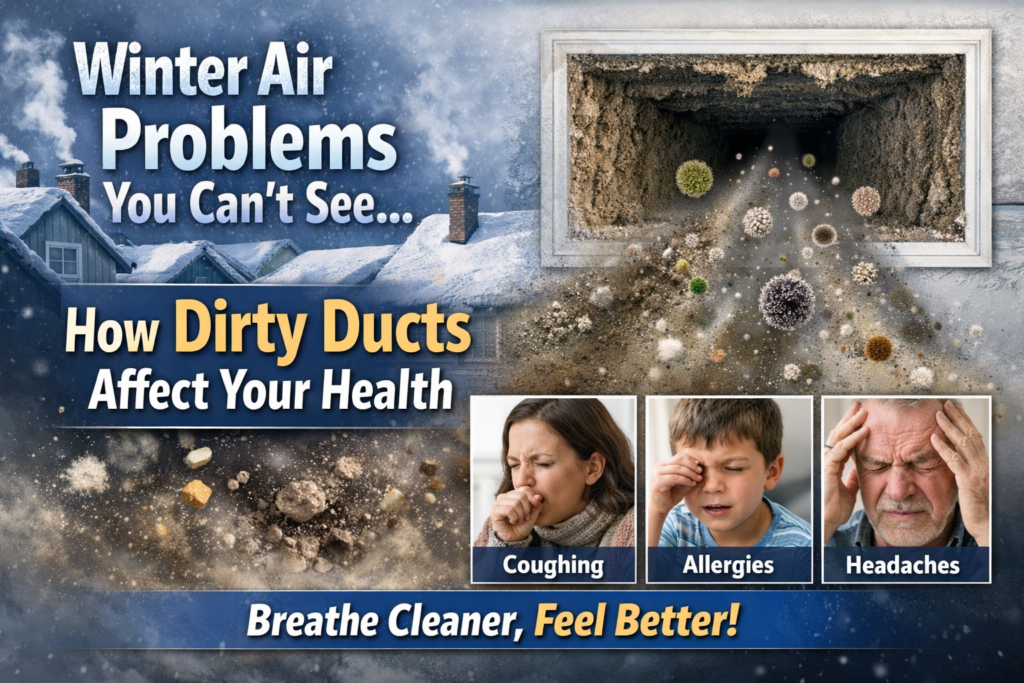
Winter in Canada means sealed windows, constant heating, and spending far more time indoors. While your home may feel warm and comfortable, the air you’re breathing could be quietly working against your health.
Dirty air ducts are one of the most overlooked contributors to winter health issues and in 2026, with rising concerns around indoor air quality, it’s more important than ever to understand what’s circulating inside your home.
Why Winter Makes Indoor Air Quality Worse
During winter, your HVAC system works overtime. Because homes are sealed tightly to keep heat in, airborne particles have nowhere to escape. Everything inside your ductwork gets continuously recycled through your living space.
Common winter contributors include:
- Dust buildup from constant furnace use
- Pet dander trapped indoors
- Mold spores from moisture and condensation
- Bacteria and allergens recirculating daily
If your ducts haven’t been cleaned in years, winter is when the impact becomes most noticeable.
What’s Really Hiding in Your Air Ducts
Air ducts act like lungs for your home. Over time, they collect contaminants that you don’t see—but definitely breathe.
Typical duct buildup includes:
- Fine dust and construction debris
- Pollen tracked in from spring and summer
- Mold growth from humidity and leaks
- Rodent droppings or insect residue (especially in older homes)
Each time your furnace turns on, these particles are pushed back into your air.
Health Issues Linked to Dirty Ducts in Winter
Many families mistake indoor air problems for seasonal illness. Poor air quality can quietly worsen or trigger:
1. Allergies and Asthma
Dust, pollen, and mold spores in ductwork can intensify symptoms, especially for children and seniors.
2. Dry Throat, Coughing, and Sinus Irritation
Dry winter air mixed with dust particles irritates your respiratory system.
3. Fatigue and Headaches
Breathing contaminated air for long periods can reduce oxygen efficiency and increase inflammation.
4. Weakened Immune Response
Constant exposure to airborne bacteria and allergens places stress on your immune system—right when winter illnesses peak.
If your home smells dusty when the heat turns on, that’s often your first warning sign.
Signs Your Ducts Need Cleaning
Not sure if duct cleaning is necessary? Watch for these winter-specific red flags:
- Visible dust blowing from vents
- Musty or stale smells when heating starts
- Allergy symptoms worsening indoors
- Uneven airflow between rooms
- Excess dust settling shortly after cleaning
Homes with pets, recent renovations, or occupants with allergies benefit the most from regular duct cleaning.
Why 2026 Is the Right Time to Prioritize Clean Air
With more people working from home and spending extended hours indoors, indoor air quality is no longer a luxury—it’s a health essential.
Modern duct cleaning in 2026 goes beyond basic vacuuming. Professional systems now use:
- High-powered negative air machines
- HEPA filtration
- Safe agitation tools to remove stubborn buildup
This results in cleaner air, improved airflow, and a healthier home environment.
Benefits of Duct Cleaning During Winter
Cleaning your ducts in winter offers unique advantages:
- Immediate improvement in air quality
- Reduced strain on your furnace
- More consistent heating throughout your home
- Lower dust accumulation on surfaces
- A fresher, cleaner indoor smell
It’s one of the simplest ways to protect your family’s health during the coldest months.
Breathe Better This Winter
You can’t always see what’s in your air—but your body feels the effects. If your home hasn’t had its ducts cleaned in several years, winter is the ideal time to act.
Cleaner ducts mean cleaner air, fewer health issues, and a more comfortable home all season long.
Take control of your indoor air quality this winter—your lungs will thank you.
Serving homes across SK, BC, and AB